Pepa's Manifesto
| AI Assisted |
Pepa — a self-hosted, octopus-inspired, cognitive infrastructure blueprint to help the elderly preserve memory, organize knowledge, and maintain agency through deterministic AI-assisted systems.
1. Purpose
Section titled “1. Purpose”Pepa is a personal AI cognitive assistant designed to help people remember things, organize knowledge, and maintain independence as they age.
The project explores how a self-hosted AI system can function as long-term cognitive support infrastructure, combining automation, memory systems, and local artificial intelligence.
Pepa begins as a personal system but is designed so others — particularly older adults and their caregivers — can eventually benefit from the same architecture.
2. Vision
Section titled “2. Vision”Computers have long augmented human physical abilities.
Pepa explores how AI can supplement and support decaying human cognitive abilities — particularly memory, organization, and decision support.
The long-term vision is a personal cognitive infrastructure that:
- captures life information
- organizes it intelligently
- recalls it when needed
- assists with daily tasks
- evolves with the user over time
3. Design Philosophy
Section titled “3. Design Philosophy”- Deterministic Core — Orchestration remains predictable; AI assists but does not control.
- Human-Centered AI — Pepa supplements cognition, not replace it.
- Data Ownership — All personal data remains under the user’s control.
- Longevity & Maintainability — Designed to survive hardware and software failures, evolution and lifecycle over a ~20 year horizon.
- Calm Technology — Everything must work together without causing a “system overload” for the elderly user.
- Open Knowledge — Architecture and lessons are documented openly for reproducibility and improvement.
- Discipline over Horsepower — A modest AI, well-governed, outperforms a giant one running loose. Pepa bets on guardrails, verification, and restraint — not on ever-bigger models. (The research agrees.)
- Memory Is Not Authority — Remembering something is not the same as being right. Every memory Pepa holds carries its origin, and nothing that touches a person’s safety is acted on from memory alone.
- Bilingual by Default — Pepa speaks English y español como se habla en Puerto Rico. Aging with dignity includes aging in your own language.
4. Octopus Architecture
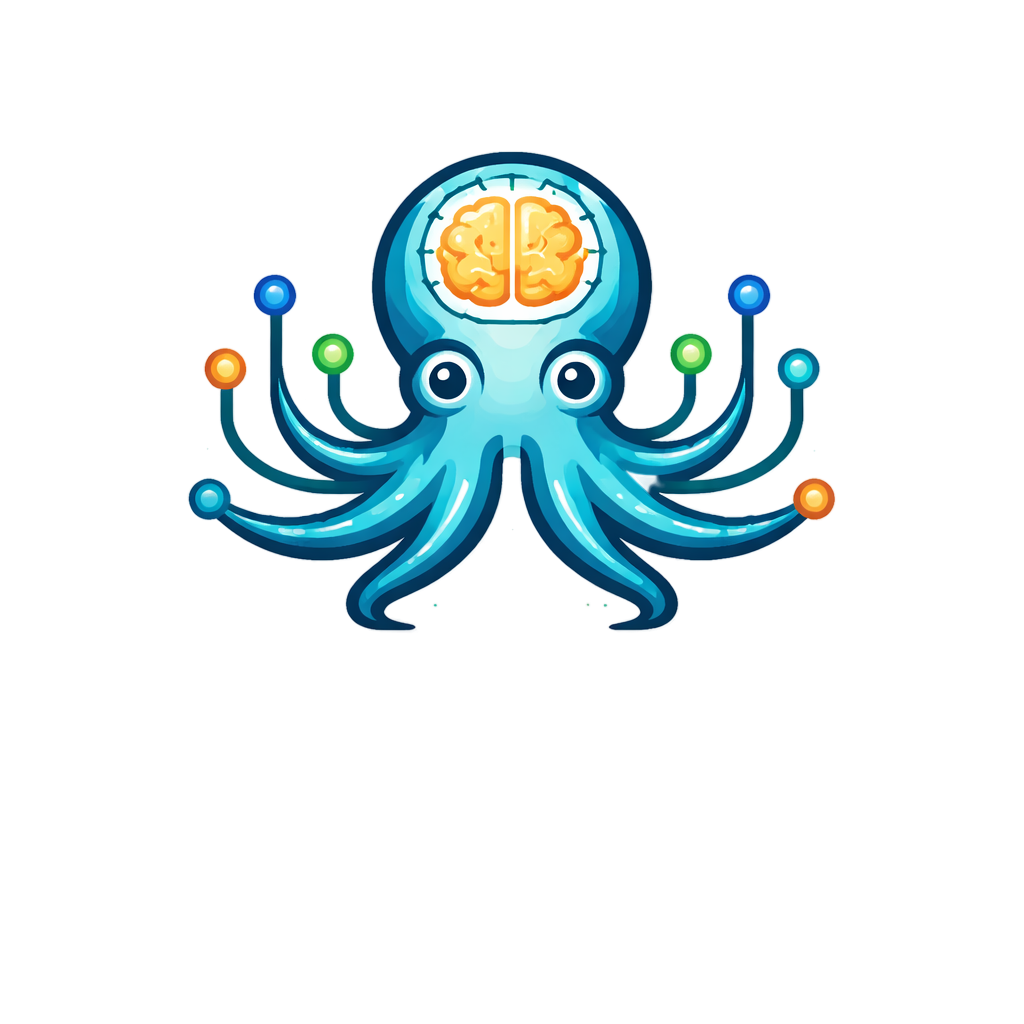
Section titled “4. Octopus Architecture”Pepa mimics nature, specifically the Octopus Model where:
- the Head (central core) performs deterministic orchestration: coordinates subsystems, managing memory, and routing requests;
- the Arms (we don’t call them tentacles) are specialized agentic subsystems that perform specific functions independently but are supervised by the head;
- the Beak is the hardware/software infrastructure that runs (feeds) the entire system: sensors, interfaces, compute, storage, networking, UPS, monitoring; it connects the parts like a nervous system.
| Arm | Function |
|---|---|
| Sensory | Pepa’s eyes, ears, voice and muscle — hears requests, senses the home, and acts in and upon it |
| Memory | What Pepa believes — experiences and facts about your life, each one tagged with where it came from and how much trust it has earned |
| Knowledge | What Pepa can cite — your documents, records, and references. Kept deliberately separate from beliefs, so memory can never contaminate the record |
| Doctor | Watches health signals and daily rhythms for changes worth noticing |
| Reasoning | The heavier thinking, done at home, on hardware you own |
| Self-Monitor | Pepa watching Pepa — a system meant to outlast its builder must check its own health |
| Others | Added when real needs appear, not before |
Benefits of the Octopus Model:
- Resilience — Subsystems can fail without collapsing the whole system
- Modularity — Each piece evolves independently
- Maintainability — Easier to debug and understand
- Scalability — New capabilities can be added as new arms, head or beak improvements
Core Principle: AI assists reasoning; deterministic orchestration maintains reliability and predictability. The exact opposite of the latest AI lobster claw craze. And octopuses eat lobsters.
5. Guiding Constraints
Section titled “5. Guiding Constraints”Pepa is designed within real-world limitations:
- modest hardware, software and subscription budgets
- homelab environments in older houses
- unpredictable and expensive energy supply
- aging hardware and upstream software dependencies
- incremental improvement and experimentation
These constraints ensure Pepa is practical, reproducible, and maintainable.
6. What Pepa Is Not
Section titled “6. What Pepa Is Not”- Not an AGI project — Focuses on practical cognitive assistance, not Artificial General Intelligence.
- Not a chatbot — Conversation is only an interface; memory and task management are primary.
- Not a robot or mechanical assistant — Pepa is software and systems-based, not a physical companion or humanoid device. In the future one could be another interface.
- Not cloud-dependent — Designed to function primarily with self-hosted infrastructure.
- Not a monolithic AI agent — Uses octopus-inspired modular subsystems; deterministic orchestration remains centralized.
- Not a commercial product — Open exploration of personal cognitive infrastructure, not a startup.
- Not perfect — Being built in a modest homelab by its own aging user so incremental improvements and failures are expected and documented.
7. Invitation to Collaborate
Section titled “7. Invitation to Collaborate”Pepa is an open exploration into the future of personal AI assistance.
We welcome developers, engineers, and thinkers interested in:
- Supporting the elderly they love, or will one day become themselves
- AI agents
- memory systems
- personal knowledge infrastructure
- self-hosted AI
- assistive technologies
Collaborators are invited to contribute ideas, critique, and improvements, with the understanding that Pepa is experimental, modular, and human-centered. Contact the editor.
8. Origin Story / Problem Statement
Section titled “8. Origin Story / Problem Statement”Pepa began as a personal solution to a universal problem: human memory and cognitive capacity decline with age. At 65, I recognized firsthand that even the most organized mind can forget important details, miss patterns, or struggle with complex daily tasks. I wanted a system that would support memory, maintain independence, and adapt over time, rather than relying on temporary digital notes or commercial assistants.
The arrival of local language models and open source AI tools made the project technically and financially achievable at my pay grade. Pepa could now combine automation, structured memory storage, and reasoning engines to create a self-hosted cognitive ecosystem — an AI system that supplements human memory and decision-making without replacing the human.
In short, Pepa is not just software and cabling. It is the practical embodiment of a personal cognitive assistant, born from necessity, informed by decades of engineering and automation experience, and designed to support the elderly while respecting autonomy, privacy, and human-centered principles.